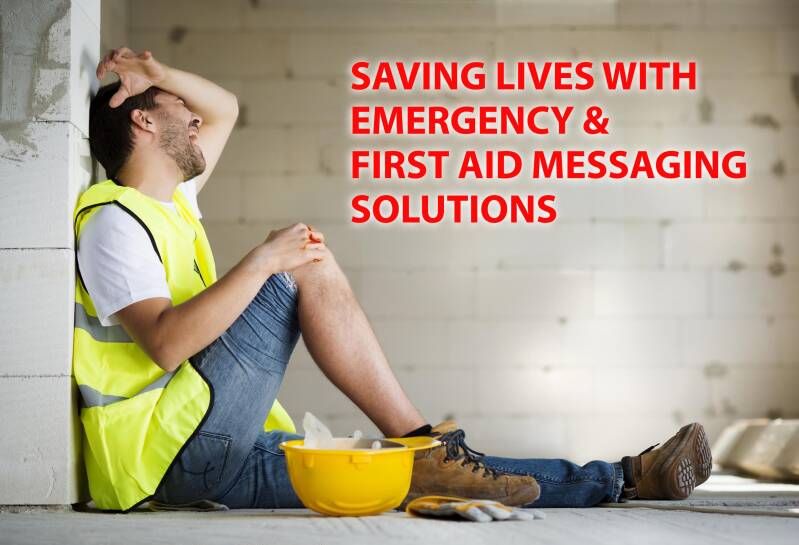
In an emergency, the most dangerous message may be the one that reaches the right person too late.
When someone is injured or urgent assistance is needed, knowing that something has happened is only the beginning. The real challenge is getting clear information to the right people quickly, especially across a large or busy workplace where first aid teams may be spread across different areas.
Effective Business Emergency and First Aid Management therefore involves more than having trained first aiders and emergency procedures in place. Businesses also need a reliable way to alert response teams when and where they are needed.
Dedicated emergency and first aid messaging systems can shorten this communication chain, provide information about where help is required, and help to coordinate a faster response.
So, how can businesses make sure that when an emergency happens, the right people know about it immediately?
Quick Summary
* Effective Business Emergency and First Aid Management depends on getting clear information to the right people quickly.
* Emergency and first aid messaging systems can alert individuals, specific response teams, or wider groups when assistance is needed.
* Alerts should clearly communicate what has happened, where the incident occurred, and who needs to respond.
* Different workplaces may require different solutions, from straightforward first aid call systems to more advanced critical messaging systems.
* Emergency communication should reflect the size, layout, risks, workforce, and response procedures of each organisation.
* The right system should support existing emergency procedures and make it easier for teams to respond when every moment matters.
Why Does Emergency Communication Matter?
The time between an incident occurring and help arriving can be crucial.
During that period, emergency and first aid teams need clear information about what has happened, where assistance is required, and who needs to respond.
Relying on someone to find a first aider, make several phone calls, send messages, or use general workplace communication channels can add unnecessary steps. There is also the risk that the right person may not see or receive the message immediately.
These challenges can become greater across factories, warehouses, industrial sites, hospitality venues, healthcare facilities, and multi-building workplaces. First aiders and emergency teams may be working in different areas, making it harder to locate and alert them quickly.
Dedicated emergency messaging systems provide a more direct route between the person raising the alert and those responsible for responding.
By reducing unnecessary communication steps, businesses can coordinate assistance more efficiently and strengthen their overall Business Emergency and First Aid Management procedures.
What Should an Emergency Alert Communicate?
Getting an emergency alert to responders quickly is important, but speed alone is not enough.
The message also needs to provide clear information that helps the right people understand what is required and where they need to go.
An effective alert should identify the type of assistance needed and where the incident has occurred. It should also reach the appropriate individual or response team rather than relying on the message being passed from person to person.
Once the situation has been assessed, responders should know whether further assistance is still required or whether other team members can stand down.
Predefined messages and dedicated call buttons can make this process simpler. Instead of someone having to explain the situation or decide who to contact during a stressful moment, a button can be assigned to send a specific message to the relevant team.
Emergency communication should ultimately be quick to activate, clear to understand, and easy to act on. The aim is not simply to send an alert faster, but to give responders the information they need to take the appropriate action.
How Do First Aid Call Systems Work?
A first aid call system creates a direct route from the person reporting an incident to the team responsible for responding.
When help is needed, someone activates a dedicated call point and an alert is sent directly to the appropriate first aider or emergency response team.
The LRS Pronto Emergency and First Aid Call System is one example. Its six buttons can be individually programmed with customised messages, allowing different alerts to be sent to an individual, a specific group, or everyone. The system is designed for site-wide operation, with repeaters available to extend coverage across larger premises.
Pronto also supports a useful response process. When an emergency button is pressed, the team can be alerted to respond. The first person to arrive can assess the situation and, if further assistance is unnecessary, press a stand-down button to notify the remaining team members.
For businesses using different communication equipment, pager messages can also be converted into audio messages and transmitted to compatible two-way radios. This helps emergency information reach staff through the communication tools they already use.
Where Can Emergency Messaging Be Used?
Emergency messaging is not limited to calling a first aider after an accident.
The same principle of sending a clear message directly to the right people can support a range of urgent situations across the workplace.
This can be particularly valuable in manufacturing facilities, warehouses, engineering operations, healthcare environments, hospitality businesses, campuses, and other large or complex sites.
In these settings, employees and response teams may be spread across different buildings, departments, or working areas.
Depending on the system and how it is configured, dedicated alerts can be used for first aid calls, security incidents, maintenance emergencies, lockdown procedures, or other predefined situations.
The aim is to give employees a simple way to raise an alert while helping the appropriate team understand where they are needed.
LRS communication equipment is already used by major organisations, including BASF and the Aston Martin F1 Team, demonstrating how these systems can support businesses operating in demanding environments.
However, there is no single emergency messaging setup that suits every workplace. The right configuration should reflect the organisation’s specific risks, site layout, workforce, emergency procedures, and the people who need to receive and respond to each type of alert.
When Is Critical Messaging Needed?
A straightforward first aid call system may be enough for many workplaces, but some organisations face more complex risks.
Large sites, hazardous working environments, lone workers, or operations with several response teams may require a more advanced critical messaging system. Swissphone Alerting Solutions provides systems designed for these more demanding situations.
Depending on the application, they can support emergency calls, lone-worker protection, technical and fire alerts, evacuations, and wider alerting across an organisation.
Swissphone systems can also use different communication methods, including pagers, mobile applications, SMS, telephone calls, and other compatible devices, helping alerts to reach the appropriate people through the channels available to them.
For lone workers, for example, an emergency may be raised manually or automatically when supported equipment detects a fall or a lack of movement. This can help initiate a predefined emergency response when a worker may be unable to call for assistance themselves.
The key is to match the system to the risk. A business should consider its working environment, site size, workforce, potential emergencies, and response procedures before deciding what level of critical messaging it needs.
The most advanced system is not automatically the right one. The right system is the one designed around how that organisation needs to respond.
What Should Businesses Look for in a System?
Choosing an emergency messaging system should start with understanding how your organisation needs to respond when something goes wrong.
The right system should fit your workplace, risks, and emergency procedures rather than adding unnecessary complexity.
Consider whether alerts can reliably reach the required people across the whole site. Messages should clearly identify the type and location of an incident, while different alerts may need to reach different first aid, security, maintenance, or emergency response teams.
Ease of use is equally important. Businesses should also consider whether the system can work alongside existing communication equipment and established response procedures.
Effective Business Emergency and First Aid Management should guide these decisions. Technology should support the way emergency teams need to work, and not force teams to redesign sensible procedures around a particular device.
Before selecting a system, it is sensible to assess your site layout, likely emergency situations, communication distances, available response teams, and escalation procedures. This provides a clearer picture of what the system actually needs to do and helps avoid paying for features that may never be required.
How Should Emergency Alerts Be Escalated?
Sending an emergency alert is only the first step.
Businesses should also consider what happens if the initial responder is unavailable, additional assistance is required, or an incident becomes more serious.
A clear escalation process can determine who receives the first alert, when another person or team should be contacted, and what happens if nobody responds within the expected time.
Depending on the workplace, this could involve notifying additional first aiders, security personnel, site managers, or a wider emergency response team.
Different incidents may also require different escalation paths. A minor first aid call may only need the nearest trained responder, while a serious accident, security threat, or hazardous incident could require several teams to be alerted.
These procedures should be established before an emergency occurs and reflected in how the messaging system is configured. This gives responders a clear communication path and reduces the need to decide who should be contacted next while an incident is already unfolding.
Conclusions
When an emergency happens, every unnecessary communication step can delay the people trying to help. The right messaging system creates a clearer path between raising an alert and getting the right response.
Effective Business Emergency and First Aid Management is ultimately about helping people feel safer, supported, and prepared when it matters most.
If you are reviewing your current emergency procedures, speak to Long Range Systems (LRS) UK or visit one of their websites like Pagers for Sale about a communication system designed around your workplace, your teams, and the risks you need to manage.
Part contribution by Anthony McKenzie of LRS UK has written a number of articles for restaurants and hospitality sectors and has created many independent reviews that readers often find useful.